Personal design study · aircraft identity
Clavius
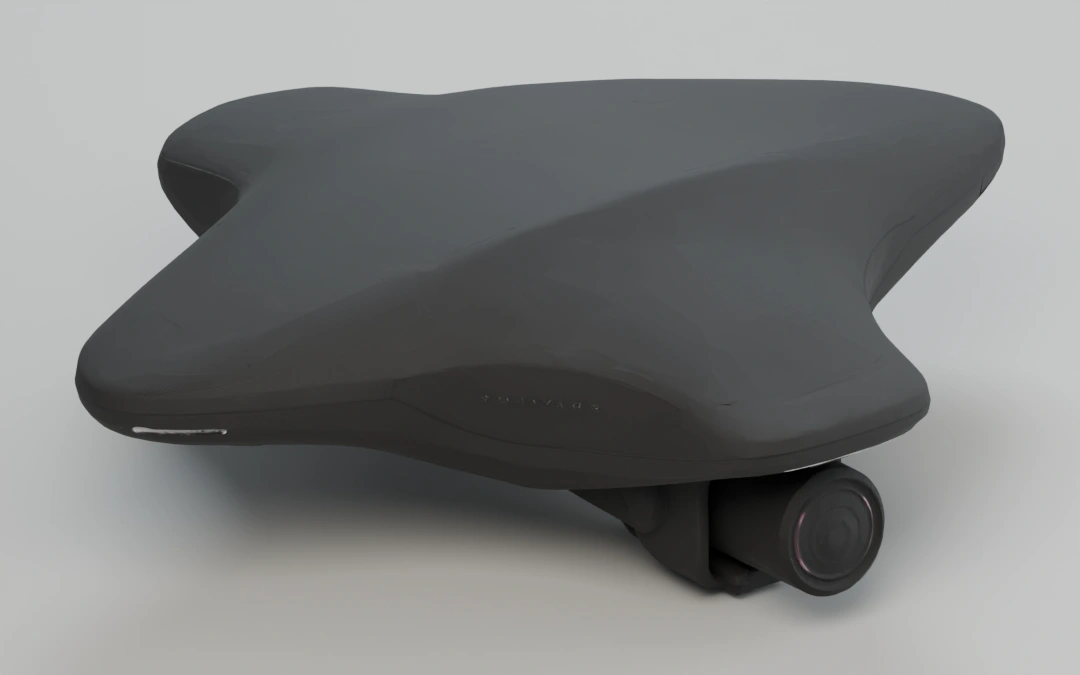
Clavius is an identity I designed for an imagined American camera aircraft. I named it, modeled its form and worked out how the same identity would read on a camera housing and a printed card.
Open the five-page identity guide PDF ↗What should a camera aircraft feel like?
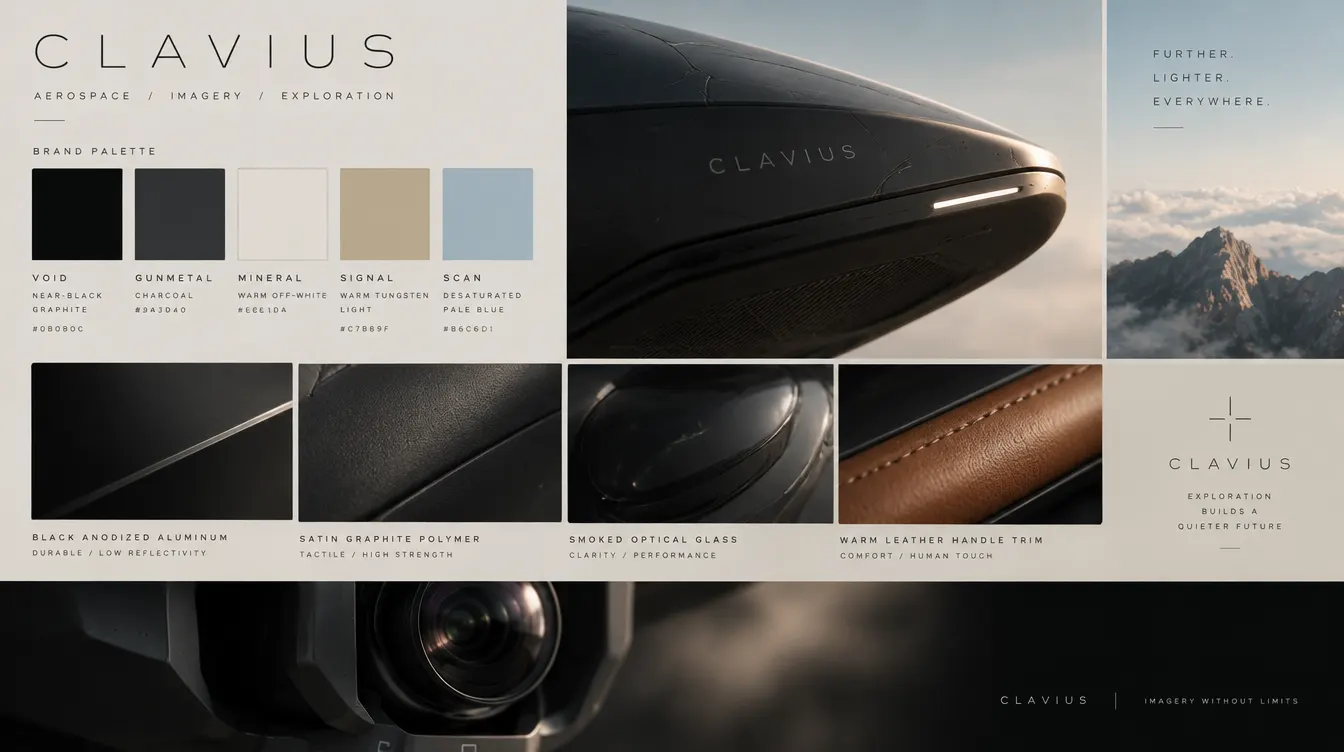
I fly drones to film buildings and real estate. The tariff news around DJI made me look at my own kit and take a closer interest in American manufacturers like Freefly. For this study I started with the part I know by touch. I wanted a handle with some warmth, a body with weight and a finish that caught the light like a camera lens.
Black anodized aluminum takes the light along an edge. Satin graphite breaks it up. The smoked glass marks the optical surface, and the warm leather puts the emphasis on the handle. Those four choices gave the aircraft and its graphics a common vocabulary.
Why Clavius?
2001: A Space Odyssey is one of my favorite films. To me, it’s American imagination at its most forward-thinking. I took the name Clavius from the lunar base where the scientists set out to see the monolith in Tycho crater. I love that they can cross space to stand in front of it and still have no idea what comes next. I wanted some of that wonder in the name.
Ansel, the aircraft
I named the aircraft Ansel after Ansel Adams, who, to me, is the greatest American photographer. When I put a camera in the air, I’m already thinking about the picture I want to bring home.
The Clavius wordmark
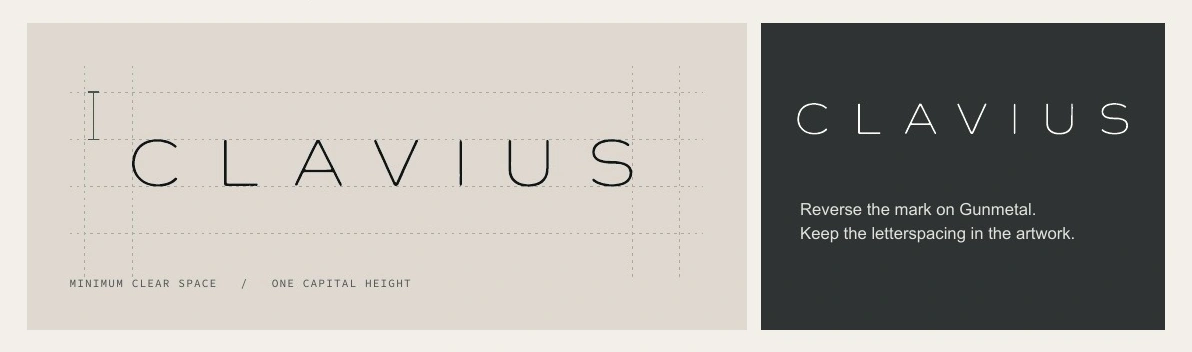
The original wordmark is wide, light and openly spaced. For the guide I used its capital height to set a clear margin, then tested it against Mineral and Gunmetal backgrounds.
From screen to print
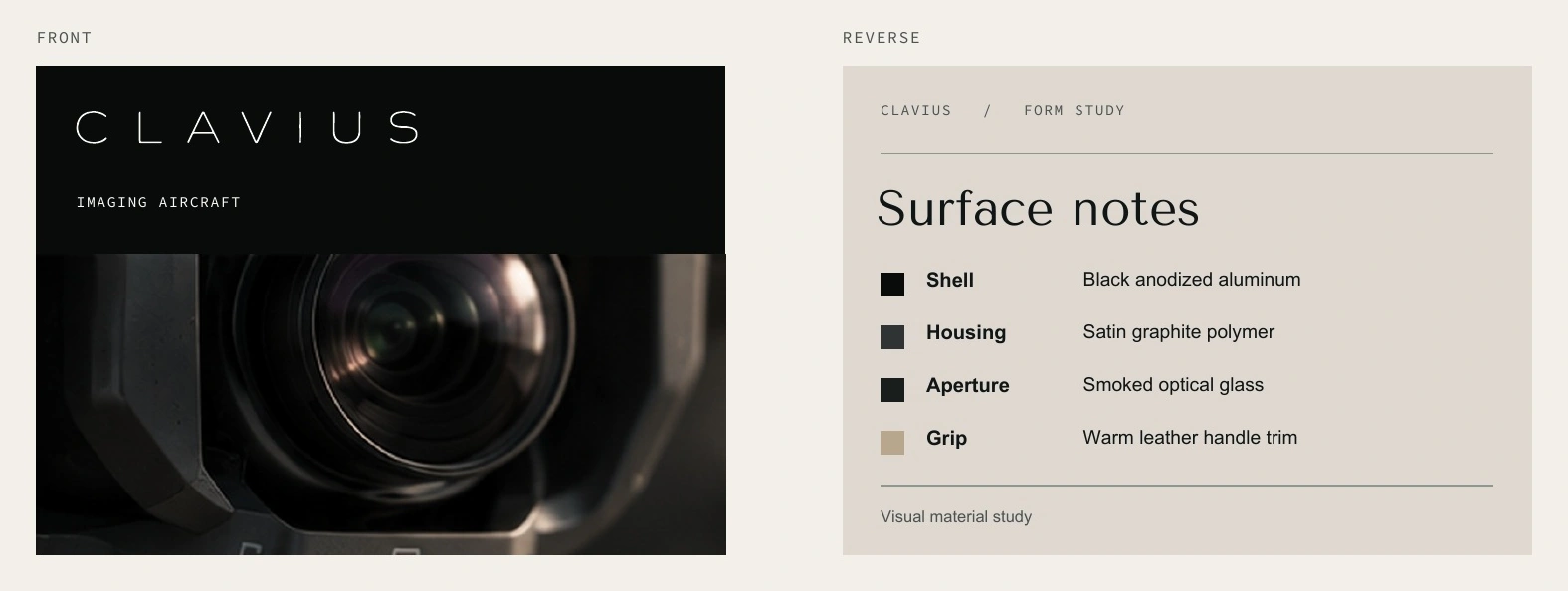
The proposed desktop showcase gives the aircraft room to rotate. At exhibition scale, the same idea fits on an A6 card. An optical detail takes the front, and a material key on the back helps visitors read the object in front of them.
Identity guide
The five-page guide, primary and reverse SVG wordmarks reconstructed from the original board, and a two-sided A6 card with 3 mm bleed.