 Independent campaign
Alex Witek
Alta X Gen2
Bring the camera.
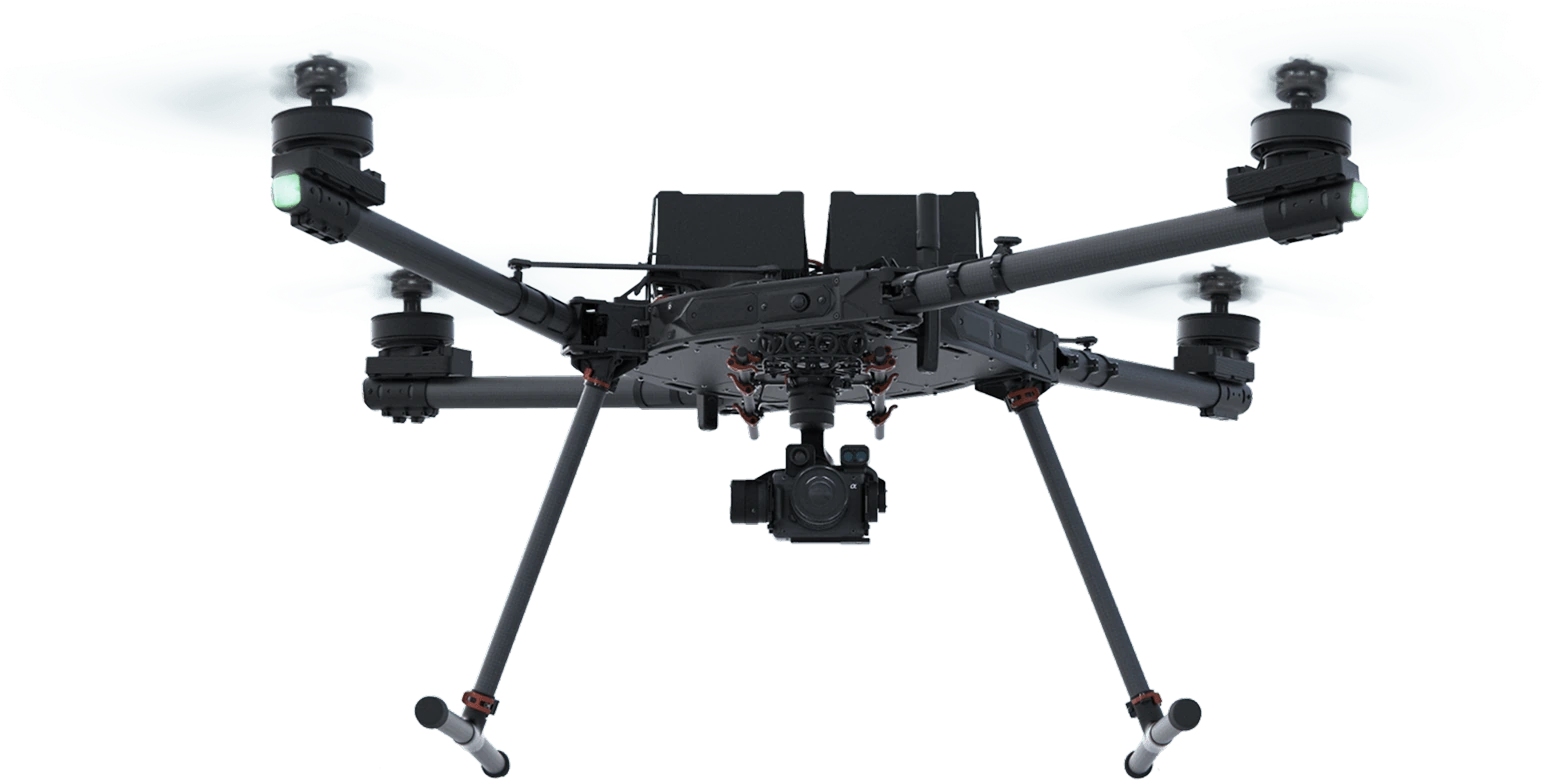
The lens, the body, the gimbal. A heavy-lift aircraft for the camera package you built on the ground.
- Maximum payload
- 15.1 kg
- Flight time at max payload
- 17 min
- Onboard accessory power
- 12 / 24 V
Under the airframe.
A camera build has to fit, draw power and stay steady. Here’s where each of those decisions lands on the aircraft.
Payload mount
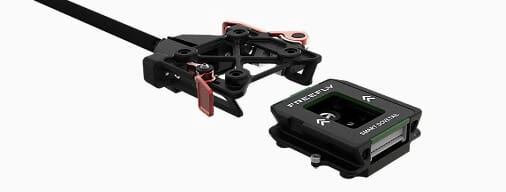
One connection at the bay.
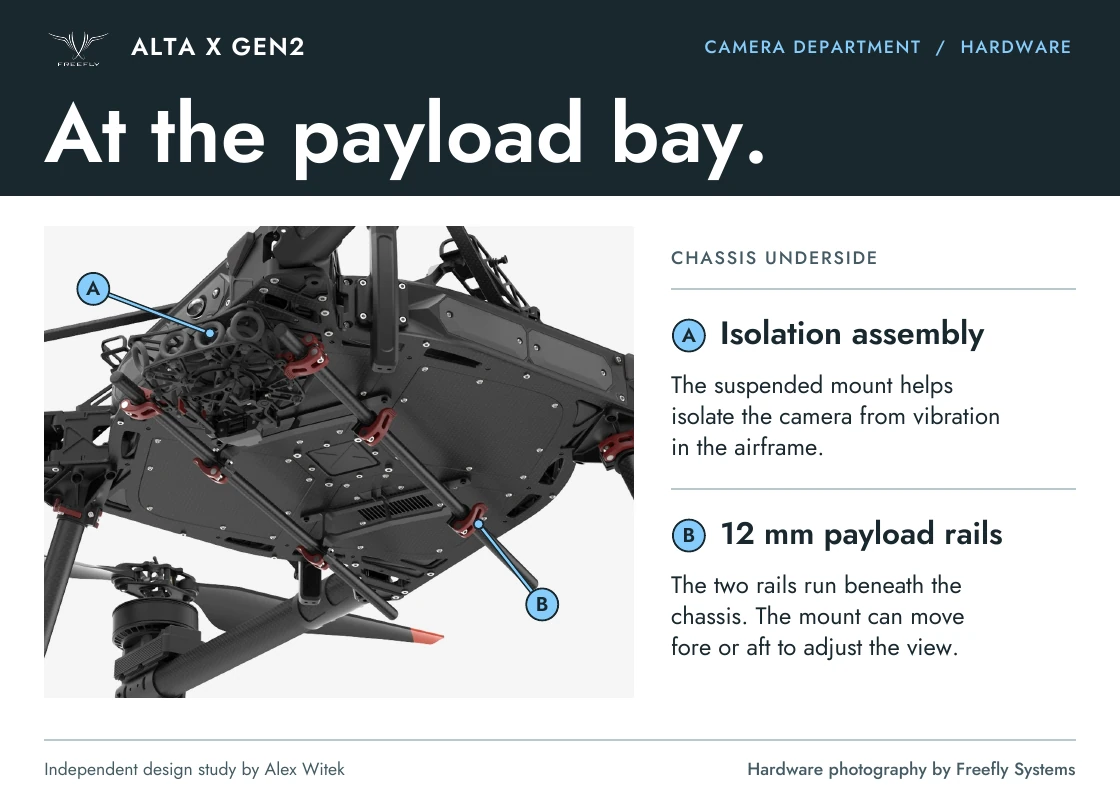
The Smart Dovetail joins a compatible payload to the aircraft mechanically and electrically. The standard kit also includes 12 mm rails for mounting a camera rig.
Vibration isolation
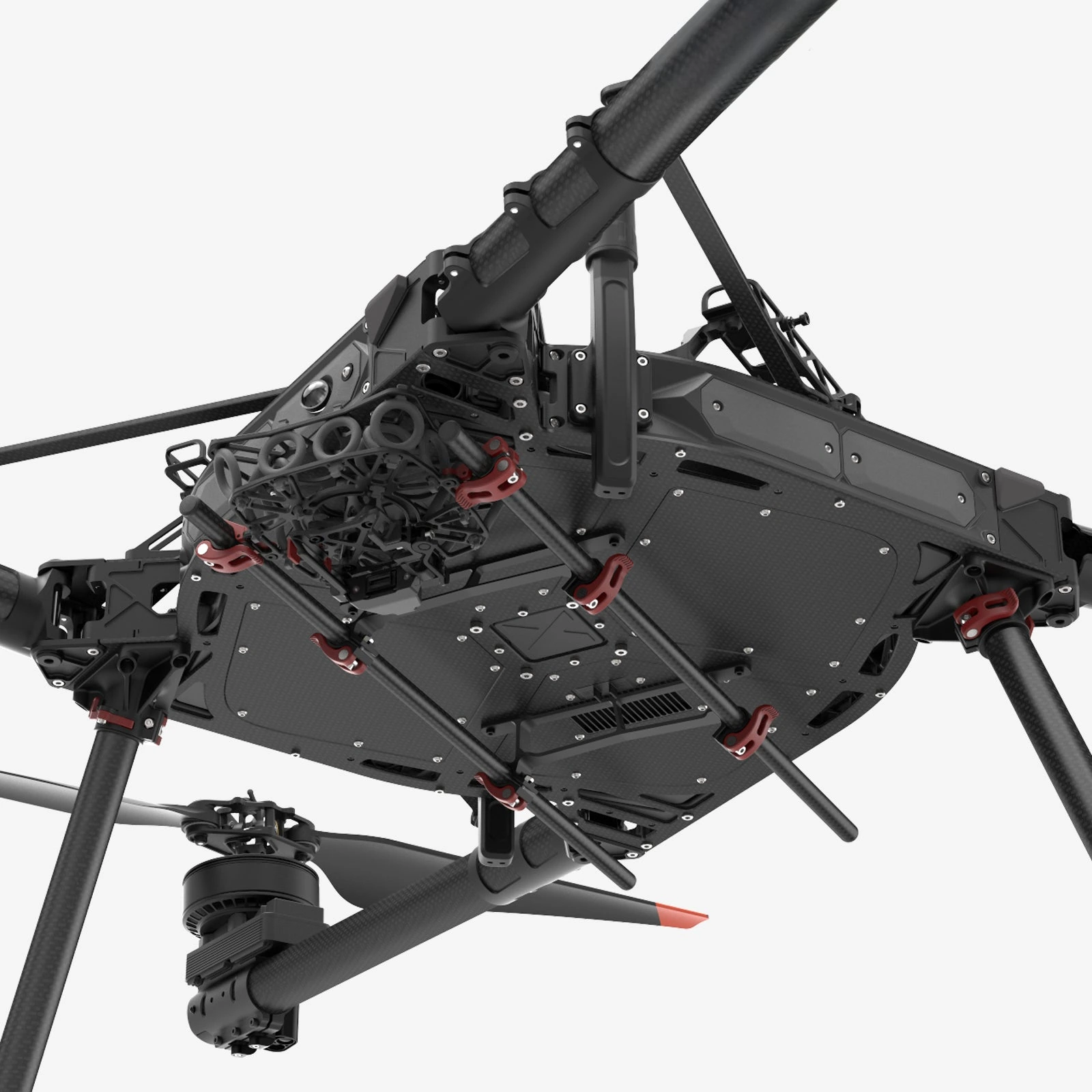
Give the lens a clear view.
The isolation assembly adjusts fore and aft for framing and balance. A crew can change damper stiffness to suit the weight of its camera package.
Accessory power
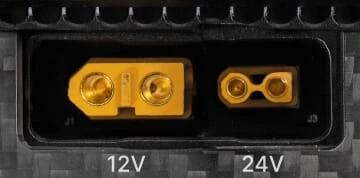
Two voltages on board.
The aircraft offers regulated 12 V and 24 V accessory outputs. Check the camera and accessory requirements when choosing how to power the build.
Weight changes the take.
Freefly’s hover tests ran the batteries from full to empty. These figures show the effect of payload on endurance. A crew still needs a landing reserve.
Flight test method ↗Aircraft specifications
- Max gross takeoff weight
- 34.9 kg
- Diameter with props
- 2,273 mm open / 877 mm folded
- Propulsion
- Four motors, 33-inch folding propellers
- Ground clearance
- 450 mm with medium legs / 580 mm with long legs
- Operating temperature
- −20 °C to +50 °C
- Ingress protection
- Tested to IP43 equivalent
Freefly technical manual ↗ Gen2 dimensions and performance ↗
Launch artwork.
The aircraft and payload ads are for the people building the rig. The ski and swim ads are for the director deciding what to shoot with it.
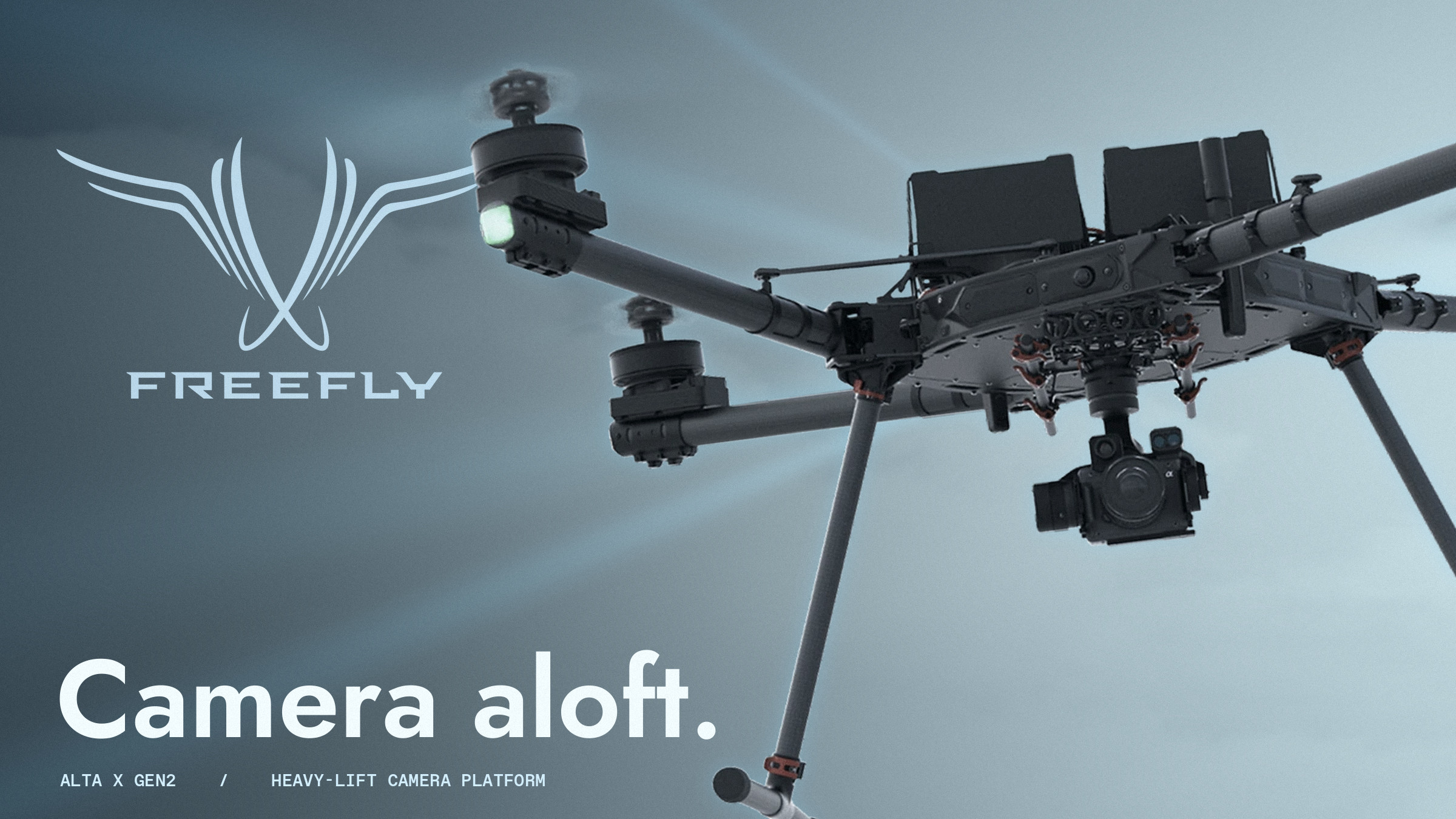
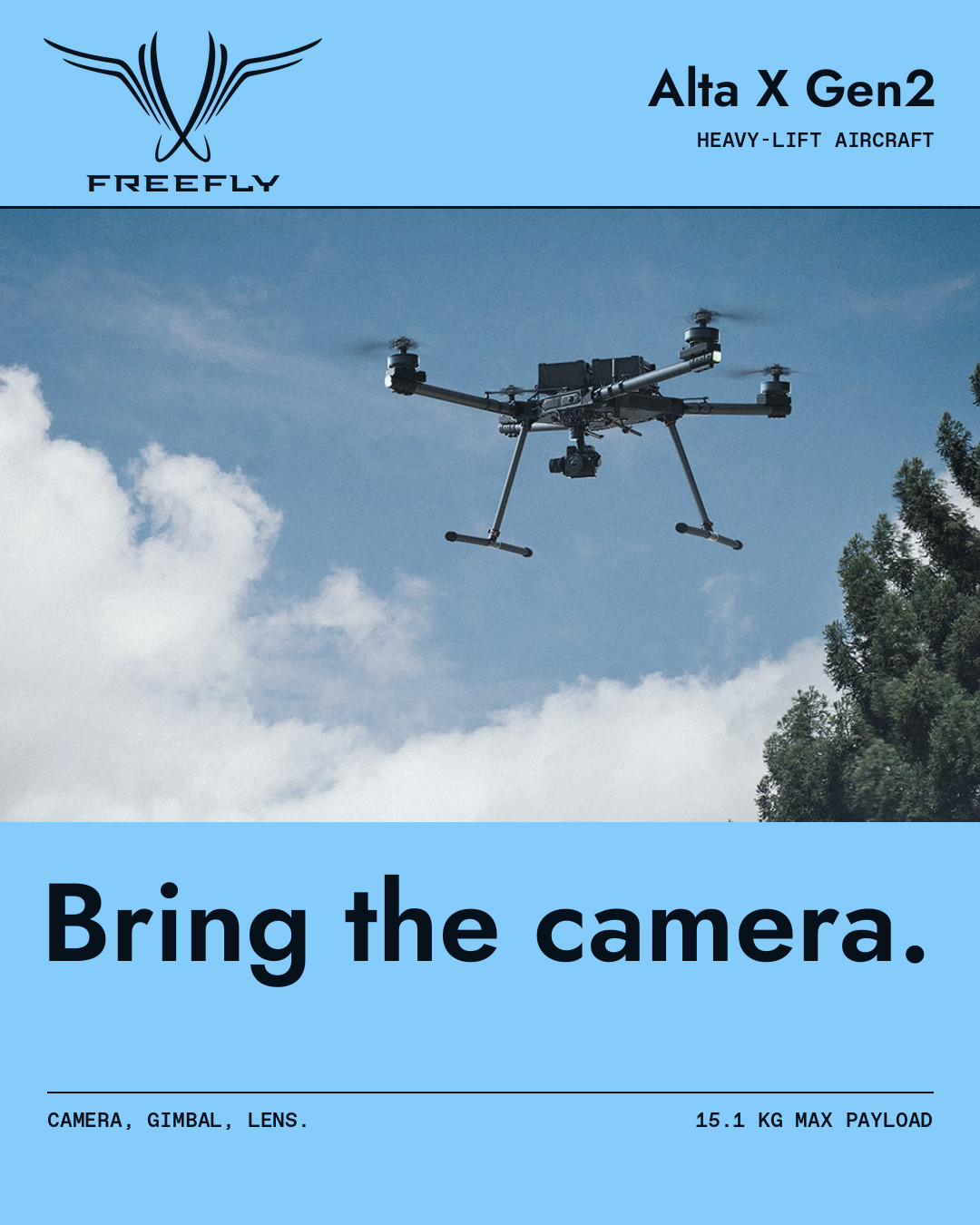
Bring the camera.
Aircraft reveal
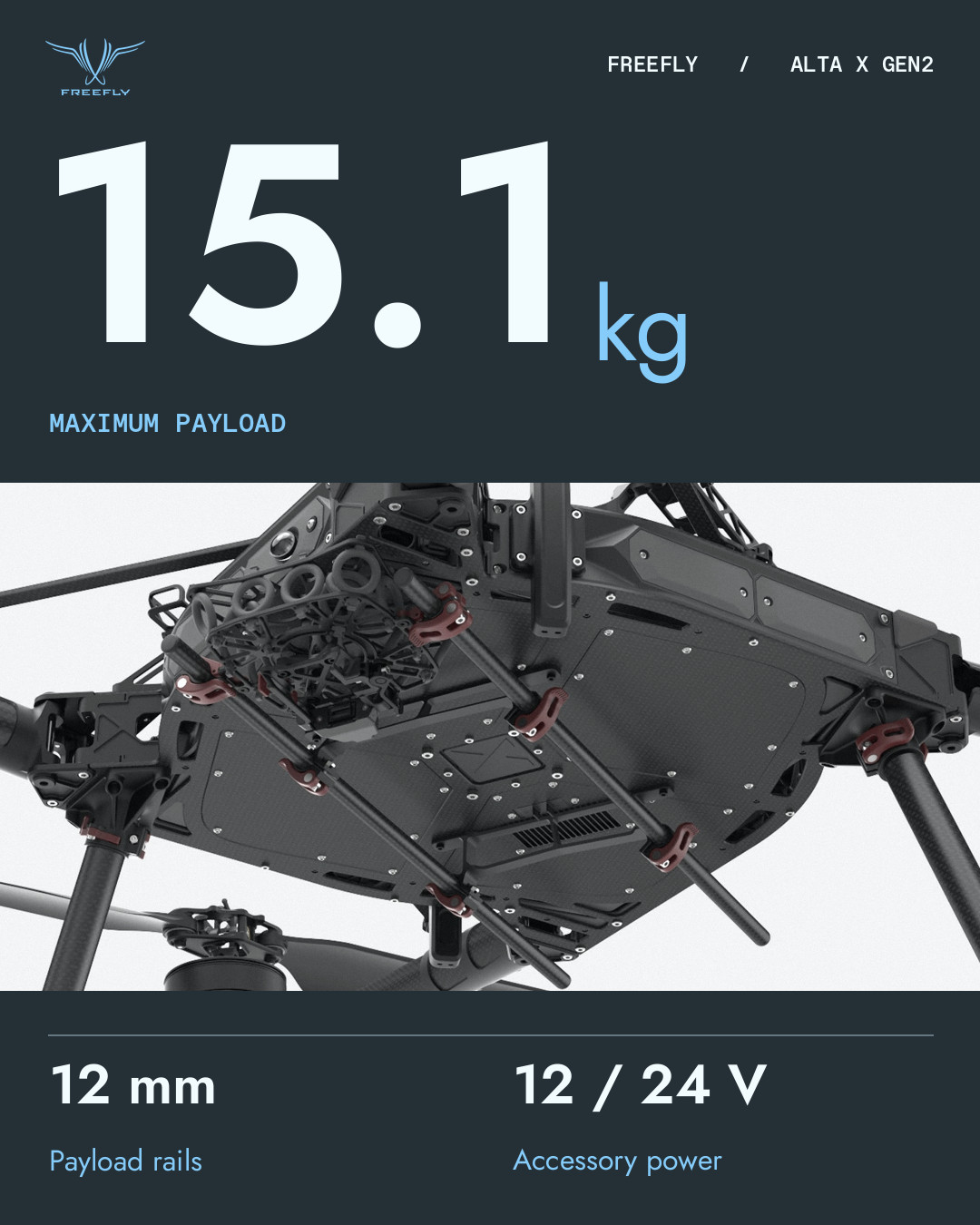
15.1 kg
Camera department
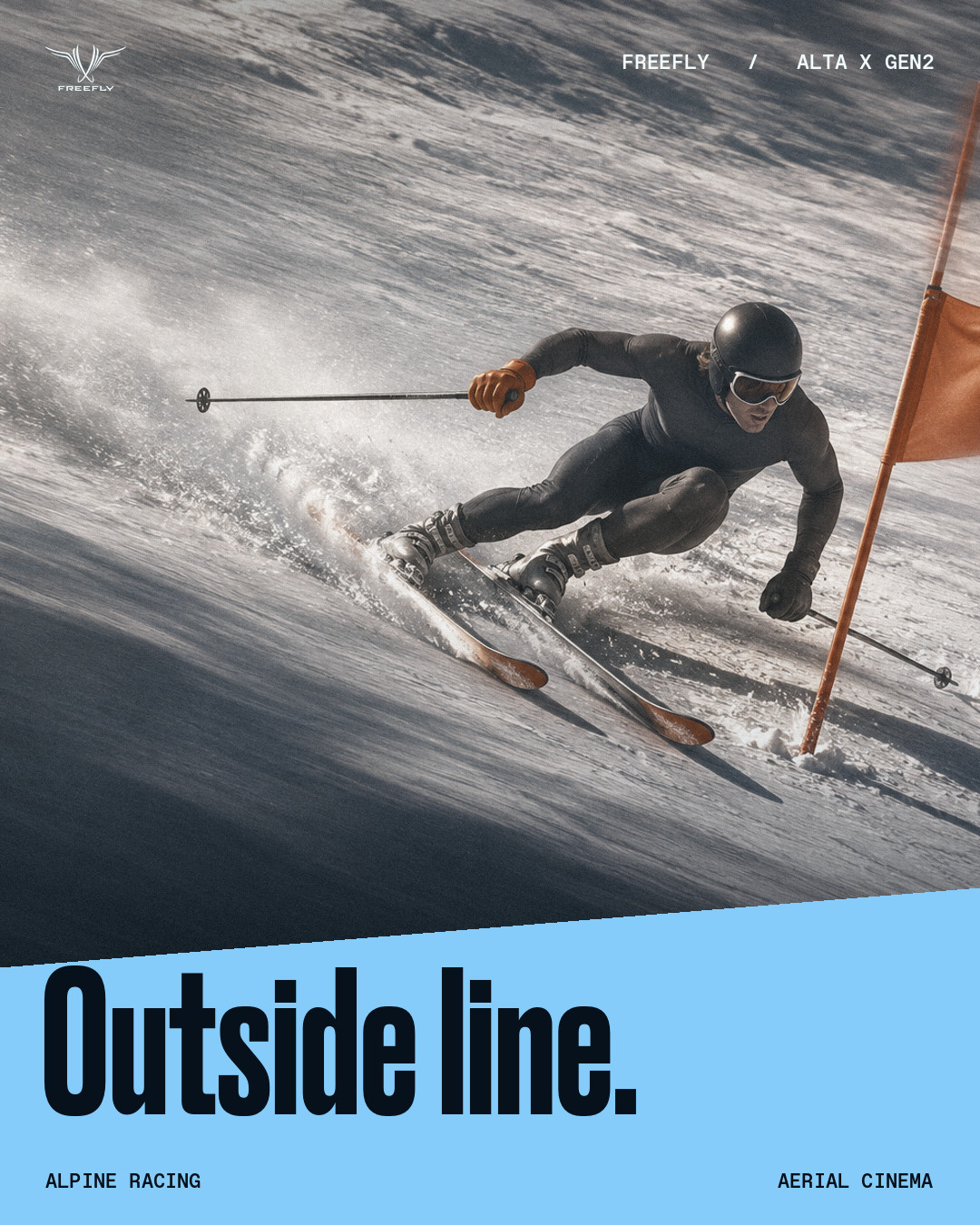
Outside line.
Alpine racing
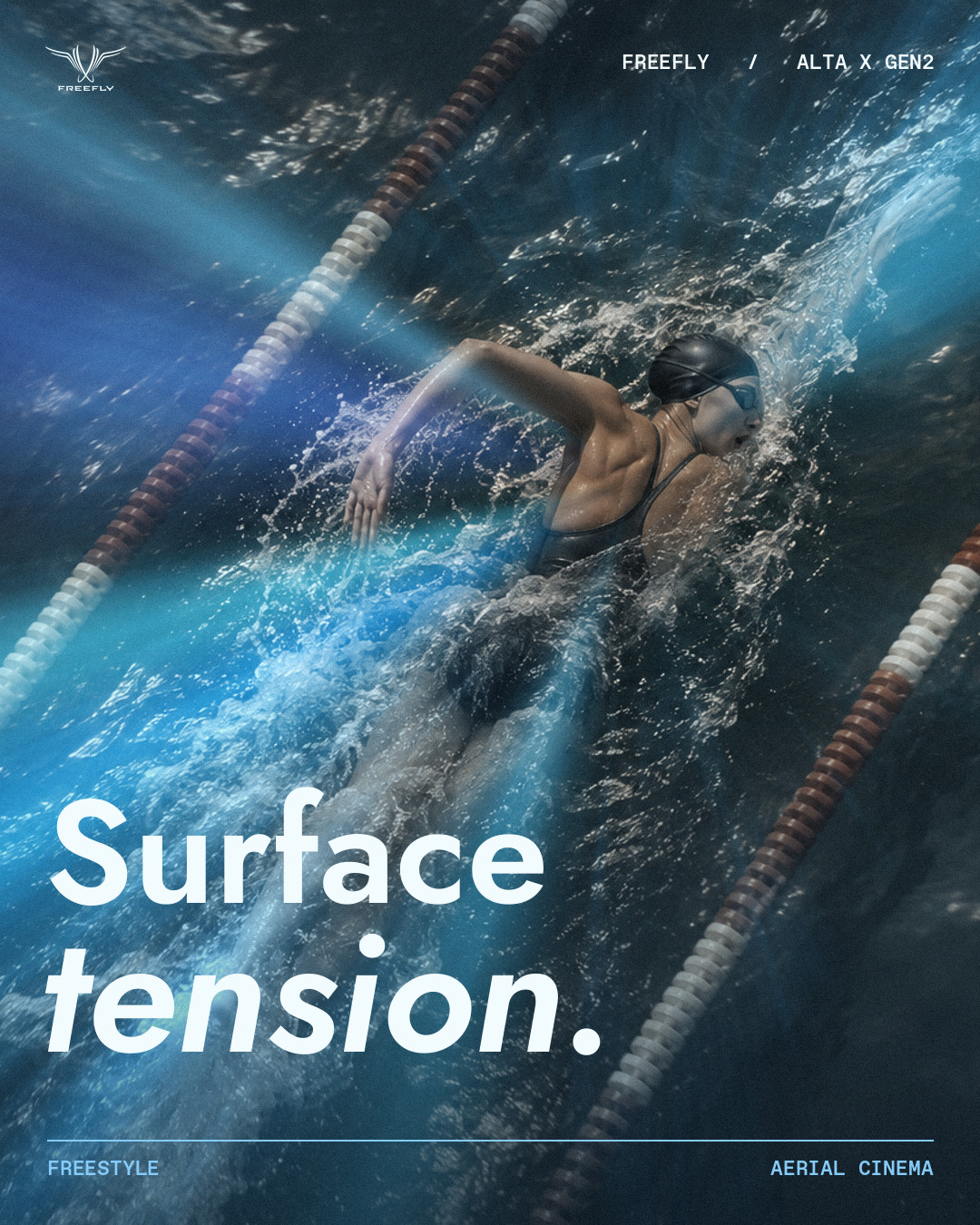
Surface tension.
Competitive swimming
Vertical films · 8 seconds each
Snow and water.
On snow, the eye follows the edge of the ski. In the pool, it follows the wake. Each edit cuts from the athlete’s movement to the aircraft that the ad introduces.
The ski and swim sequences are concept illustrations. Aircraft footage courtesy of Freefly Systems.
From the ad to prep day.
After the reveal, the producer and camera lead need to talk about their own rig. The invitation and handoff sheet give them a place to start.
Proposed demo email
Which camera are you bringing?
Send over the body, lens, gimbal and total package weight. At the demo, we’ll look at mount clearance, accessory power and the flight-time figures for your build.
Explore the aircraft at Freefly ↗Camera handoff
The camera brief.
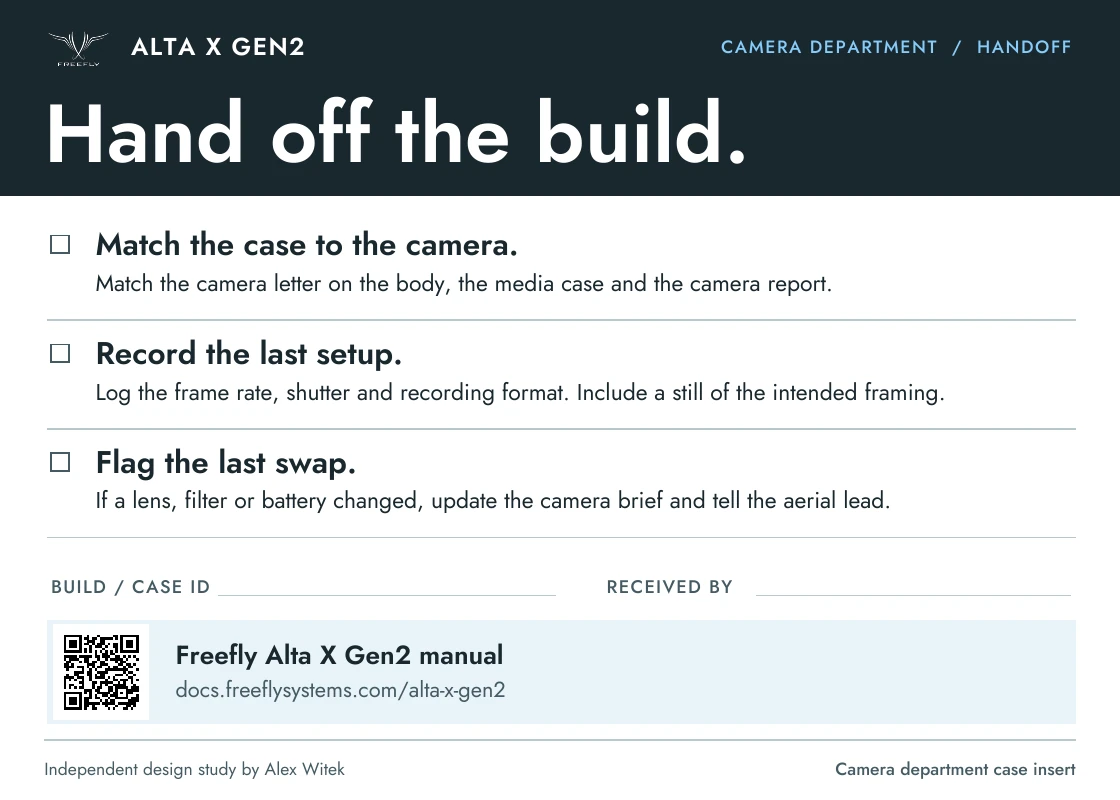
Record the camera package, crew contact and handoff notes on a single fillable sheet.
Download the camera brief · PDF ↓Print · 7 × 5 in
Inside the camera case.
I designed a two-sided card for the moment a camera changes hands. On the front, the crew can identify the rails and isolation mount at a glance. On the back, there’s room to flag a lens change or pass along the last camera setup.
Production notes and sources
Independent portfolio study by Alex Witek. Product photography, flight footage and the wing mark are from Freefly Systems. The mountain backdrop and athlete portraits are campaign illustrations. I paired them with Freefly’s aircraft imagery in the ads and motion edits.
The earlier print concept used Freefly’s 500-flight-hour reliability target. For this campaign I shifted the emphasis to the camera package and the shot a director wants to make.
Earlier print study · PDF ↗ Product photography and standard kit ↗ Gen2 product film and specifications ↗